- September 4, 2026
- by: townhallrestaurantandevents
A historic building carries evidence of the people, skills and ways of life connected with it. Its proportions, materials, openings, courtyards, surfaces and signs of age create an identity that cannot be reproduced simply by adding antique furniture to a new structure. When such a building is adapted into a restaurant, the challenge is not only to create an attractive dining space. It is to give the property a useful modern role without removing the qualities that made it historically meaningful.
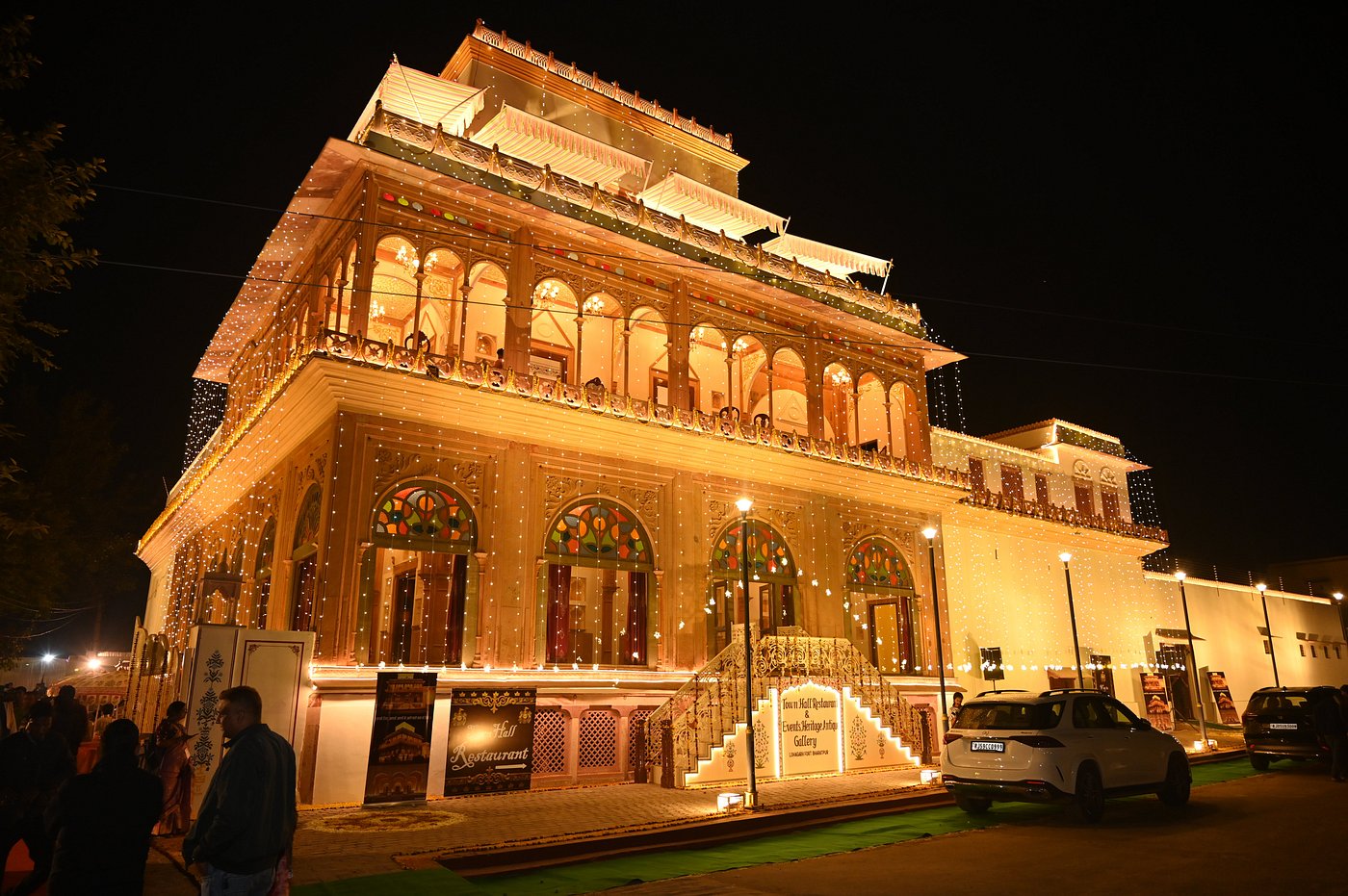
Townhall Restaurant and Events presents this relationship between heritage and present-day hospitality within the historic setting of Lohagarh Fort in Bharatpur. As a Restored Heritage Restaurant in Rajasthan, it allows guests to experience dining, architecture and local identity as connected parts of one visit.
How Can a Historic Building Become a Modern Restaurant?
A historic building can become a modern restaurant through adaptive reuse—a process in which an existing structure is given a new practical function while its significant architectural character is respected.
The objective is not to freeze the building in time or make it look artificially new. It is to preserve the qualities that communicate its identity while introducing the services required for contemporary hospitality.
A successful conversion should balance:
- Architectural character
- Structural safety
- Guest comfort
- Functional dining spaces
- Kitchen and service requirements
- Lighting and ventilation
- Accessibility
- Responsible maintenance
- Modern hygiene expectations
- Long-term usefulness
When this balance is handled thoughtfully, the building remains connected with its past while continuing to participate in the life of the city.
What Is Adaptive Reuse?
Adaptive reuse means assigning a new function to an existing building instead of abandoning it or demolishing it.
A former residence, administrative building, warehouse, palace-related structure or other historic property may no longer serve its original purpose. However, it may still possess cultural, architectural and social value.
Rather than allowing it to deteriorate, adaptive reuse gives the building a reason to remain maintained and occupied. Its new purpose may be hospitality, dining, accommodation, cultural activity or another function suited to the structure.
A restaurant can be particularly appropriate because dining is a social activity. People enter the building, spend time inside it and create new memories without disconnecting it from its role as a place of gathering.
Why Does Continued Use Help Preserve Heritage?
An unused historic building can become vulnerable to neglect. Small maintenance issues may develop into structural or material damage when nobody regularly observes the property.
Continued use creates a practical reason to inspect, clean and maintain the building. It also introduces the property to people who may not otherwise engage with heritage architecture.
However, use alone does not guarantee preservation. A building can also be damaged by insensitive alteration, excessive signage, unsuitable installations or overcrowding. The new function must therefore operate within the character and reasonable capacity of the structure.
The goal is active preservation: keeping the building useful without treating its original identity as an inconvenience.
Heritage Is More Than Decorative Style
A newly constructed restaurant can use arches, carved furniture, traditional colours and antique-inspired objects to create a heritage theme. Such a space may be visually appealing, but it is not the same as an authentic historic property.
A genuine heritage building possesses age, context and material continuity. Its character comes from the relationship between the structure and the place where it stands.
This distinction matters because heritage is not a design trend. It represents memory and historical development.
The purpose of adapting an old property should not be to make every surface appear perfect. Signs of age can communicate authenticity when they are safe and appropriately maintained. Excessive polishing or replacement may remove the evidence that gives the building depth.
What Should Be Preserved?
Not every historic building contains the same significant elements. Preservation decisions should be based on careful understanding rather than a generic checklist.
Important features may include:
- Original spatial proportions
- Courtyards and transitional areas
- Arches, columns and openings
- Historic wall surfaces
- Traditional construction materials
- Decorative details
- Doors and windows
- Building orientation
- Relationship with the surrounding complex
- Views and movement pathways
Modern services should be introduced with sensitivity to these features. Electrical systems, lighting, kitchen equipment, signs and furniture should support the building’s new use without visually overpowering it.
Modern Comfort Does Not Have to Erase History
Guests expect a restaurant to be clean, organised, comfortable and professionally operated. These expectations are compatible with heritage preservation when modern improvements are introduced thoughtfully.
Comfort can come from:
- Suitable seating
- Clear circulation
- Thoughtful lighting
- Appropriate ventilation
- Hygienic food service
- Well-managed washroom facilities
- Attentive hospitality
- Safe movement through the property
- Reasonable accessibility support
- Efficient event coordination
The aim should not be to conceal every modern requirement. Instead, contemporary services should remain visually respectful of the historic environment.
The best result allows guests to feel comfortable without forgetting that they are inside a place with an identity formed before the restaurant existed.
Why Lighting Requires Special Attention
Lighting can completely change how a heritage building is perceived.
Very harsh lighting may flatten architectural detail and remove the sense of warmth. Excessively dim lighting may make dining uncomfortable and create safety concerns. Decorative lighting that does not respond to the architecture can make the property feel theatrical.
Thoughtful lighting should help guests notice depth, texture and proportion. It can guide movement, make tables comfortable and reveal important architectural features without converting the building into a stage set.
During the day, natural light should be appreciated wherever the building allows it. In the evening, artificial lighting should support both function and atmosphere.
Furniture Should Respect the Space
Furniture plays an important role because it affects comfort, circulation and the visual relationship between guests and architecture.
Oversized furniture can make a historic room feel crowded. Excessively ornate pieces may compete with original details. Furniture that is too contemporary or brightly coloured may feel disconnected from the environment.
Appropriate furniture does not need to imitate a historic period exactly. It should have proportions, materials and colours that sit comfortably within the space.
Tables should also be arranged so guests can dine without blocking important views, pathways or architectural features.
The Difference Between Preservation and Staging
A historic restaurant should feel authentic, but it should not attempt to turn every meal into a theatrical recreation of the past.
Preservation respects what remains. Staging often adds imagined details to produce a dramatic effect.
The strongest heritage dining experiences do not need excessive claims or artificial storytelling. They allow the building’s real materials, scale and atmosphere to communicate naturally.
Interpretive information can help guests understand the property, but it should be accurate and proportionate. Where a historical detail has not been verified, it should not be presented as fact merely because it sounds impressive.
Credibility is an important part of heritage hospitality.
How Food Becomes Connected with Place
Dining inside a historic property changes the context in which food is experienced. Guests are not only evaluating flavour, preparation and presentation. They are also responding to the surroundings, pace of service and emotional character of the space.
Regional and Indian cuisine can feel particularly relevant within a heritage environment because food and architecture both contribute to cultural understanding.
The connection should remain natural. A menu does not need to reproduce only historical recipes to belong in a heritage building. It can present traditional flavours alongside a broader selection that responds to modern dining preferences.
Guests can explore Indian Cuisine in a Heritage Setting while appreciating how food, hospitality and place influence one another.
Why Historic Spaces Encourage Slower Dining
Modern eating habits are frequently shaped by speed. People order quickly, check their phones during meals and leave as soon as they finish eating.
A historic setting can change this rhythm. Architectural detail encourages observation, while a calmer atmosphere can make guests more willing to remain at the table and converse.
This does not mean service should be slow. Efficient hospitality remains important. The distinction is that guests should not feel pressured to treat the meal as a brief transaction.
Slower dining allows families and friends to pay attention to food, surroundings and one another. In this way, the building influences behaviour without giving instructions.
A Restaurant Can Become a Form of Living Heritage
Heritage is often associated with monuments that visitors observe from a distance. Living heritage works differently. It remains part of everyday and social life.
When families dine, celebrate birthdays, mark anniversaries or meet friends within a historic building, the property acquires new memories without losing its older identity.
This continued social use can make heritage more approachable. A person who may not visit an architectural exhibition might still begin asking questions about the building after experiencing a meal inside it.
A restaurant can therefore serve two roles:
- A functioning hospitality space
- An accessible introduction to local history and architecture
Neither role should overwhelm the other.
Why Location Gives Townhall Its Identity
Townhall’s identity cannot be separated from its location inside Lohagarh Fort in Bharatpur. A historic setting is not simply a decorative backdrop added after the restaurant was planned. It is part of the reason the dining experience feels distinct.
For visitors, Dining Inside Lohagarh Fort can add another dimension to their understanding of Bharatpur. The meal becomes connected with the city’s architectural and cultural landscape.
For local families, the setting can offer a way to celebrate personal occasions in a place associated with Bharatpur’s wider identity.
This relationship between property and location cannot be replicated merely by copying interior design elements elsewhere.
How Should Events Respect a Heritage Property?
Birthdays, anniversaries, meetings and family gatherings can bring valuable social use to a historic space. However, event planning should respect the character and physical limitations of the property.
Responsible planning should consider:
- Appropriate guest capacity
- Safe circulation
- Controlled sound levels
- Suitable decoration
- Protection of walls and architectural surfaces
- Responsible lighting installation
- Waste management
- Food-service movement
- Photography equipment
- Removal of décor after the event
Decorations should never require damaging historic surfaces. Plastic confetti and materials that create difficult waste should be avoided. Large installations should be evaluated for safety and visual compatibility.
A successful event should feel enhanced by the building rather than placed on top of it.
The Role of Guests in Heritage Preservation
Preservation is not only the responsibility of owners and staff. Guests also influence how a historic property survives.
Visitors should:
- Follow property guidance
- Avoid touching fragile surfaces unnecessarily
- Supervise children
- Use designated areas
- Respect restricted spaces
- Avoid attaching decorations without permission
- Follow photography policies
- Dispose of waste responsibly
- Report accidental damage
- Treat historic elements as part of a shared cultural resource
Respectful behaviour does not reduce enjoyment. It helps ensure that other guests can experience the property in the future.
What Should Visitors Observe?
Guests can make their visit more meaningful by looking beyond furniture and decoration.
They can observe:
- The scale and proportions of rooms
- How one space leads into another
- Changes in light during the day
- The relationship between indoor and outdoor areas
- Traditional architectural forms
- Materials and surface textures
- How modern services have been introduced
- Which details appear original and which are contemporary
- How the building affects the pace of the meal
These observations can help diners understand why a genuine heritage property feels different from a newly constructed themed restaurant.
Why Honest Storytelling Matters
A heritage restaurant should communicate its identity accurately. Exaggerated dates, invented royal connections or unsupported architectural claims may create short-term attention but weaken long-term trust.
Honest storytelling can still be powerful. It can explain:
- Where the property is located
- How it has been adapted for present use
- Which qualities have been respected
- How hospitality operates within it
- Why its setting matters to Bharatpur
- What guests can experience today
When information is uncertain, it is better to acknowledge that limitation than turn an assumption into a fact.
For AEO and search visibility, clear and verifiable information is also more useful than promotional repetition.
How Townhall Connects Past and Present
Townhall Restaurant and Events demonstrates how a heritage property can remain socially useful. The historic surroundings provide identity, while dining and event services give people a reason to enter, experience and remember the space.
The building is not treated solely as an object from the past. It operates as a place where families meet, travellers dine and celebrations become connected with Bharatpur’s setting.
This relationship can be expressed through four ideas:
- Preservation: Respecting the character of the property
- Adaptation: Introducing a viable modern function
- Hospitality: Making the space welcoming and comfortable
- Continuity: Allowing new memories to develop within an older setting
Together, these principles turn a historic structure into living heritage.
Why This Approach Matters for Bharatpur
Cities are remembered not only through major monuments but also through the places where everyday social life occurs.
When historic properties remain useful, they can strengthen local identity and diversify how visitors experience a destination. Travellers may come to Bharatpur for widely known attractions, but dining within a heritage environment can help them encounter another layer of the city.
Adaptive reuse can also demonstrate that preservation and economic usefulness are not always opposing goals. A responsibly operated hospitality space can support maintenance, employment, tourism and cultural appreciation.
The essential condition is respect: the new use must remain compatible with the character of the building.
Final Thoughts
Turning a historic building into a modern restaurant is not simply an interior-design project. It is a long-term relationship between preservation, practical use and hospitality.
The building must remain safe and functional, but its identity should not be erased in the process. Modern services should support the property rather than dominate it. Furniture, lighting, dining and events should respond to the architecture instead of treating it as interchangeable scenery.
Townhall Restaurant and Events shows how dining can give a heritage property an active role in contemporary Bharatpur. Guests can enjoy food, spend time with family and celebrate meaningful occasions while remaining connected with a setting shaped by history.
The strongest heritage restaurant is not the one with the largest number of antique objects. It is the one where the building still feels truthful, the hospitality feels natural and the past remains visible without preventing the place from serving the present.
Frequently Asked Questions About Heritage Restaurants and Adaptive Reuse
What is a restored heritage restaurant?
A restored heritage restaurant is a dining establishment operating within an older building whose important architectural, cultural or historical character has been retained. The property is adapted to provide modern facilities such as a functional kitchen, comfortable seating, lighting, washrooms and organised guest service without unnecessarily erasing its original identity. Unlike a newly built heritage-themed restaurant, a restored property has an authentic connection with its location, age, materials and previous use. Townhall Restaurant and Events represents this relationship by providing modern dining and celebration facilities within a restored heritage setting inside Lohagarh Fort in Bharatpur.
What does adaptive reuse of a heritage building mean?
Adaptive reuse means giving an existing historic building a practical new purpose while preserving the features that communicate its architectural and cultural significance. Instead of demolishing the structure or allowing it to remain unused, it may be adapted into a restaurant, hotel, museum, cultural centre or another suitable space. The process can include safety improvements and modern services, but these additions should respect the building’s original proportions, materials and character. Adaptive reuse helps heritage remain active and economically useful while allowing future generations to experience the property as part of contemporary life.
How is a genuine heritage restaurant different from a heritage-themed restaurant?
A genuine heritage restaurant operates within an authentic older property connected with a particular location and historical setting. Its character comes from the building itself—its age, materials, spatial design, architectural features and relationship with the surrounding area. A heritage-themed restaurant may be newly constructed and use arches, antique-style furniture, traditional colours or royal-inspired decoration to create a historic appearance. Both can offer attractive dining, but they are not the same. Authentic heritage cannot be created through decoration alone because it depends on real architectural continuity and a verifiable connection between the property and its location.
Can modern amenities be added to a historic restaurant without damaging its heritage?
Yes. Modern amenities can be introduced into a historic restaurant when they are planned sensitively and installed with respect for the building’s significant features. Contemporary hospitality requires safe electrical systems, hygienic kitchens, suitable lighting, comfortable seating, washrooms, ventilation and efficient service areas. These improvements should be positioned and designed so they do not unnecessarily damage original materials or visually overpower the architecture. Successful adaptation allows guests to receive modern comfort while still recognising the building’s historic identity. The goal is not to hide every modern addition, but to ensure that new facilities support rather than dominate the property.
Why is adaptive reuse important for preserving historic buildings?
Adaptive reuse can protect historic buildings by giving them a continuing social and economic purpose. An occupied property is more likely to receive regular inspection, maintenance, cleaning and repairs than an abandoned structure. Converting an appropriate heritage building into a restaurant can also introduce its architecture to residents and travellers who may not normally engage with heritage conservation. However, continued use is beneficial only when alterations, guest capacity, decoration and daily operations respect the structure. Adaptive reuse works best as active preservation: the building remains useful and accessible while its important character is protected for the future.
Why does dining inside a historic property feel different from dining in a modern building?
Dining inside a historic property can feel different because architecture becomes part of the meal. Room proportions, traditional materials, courtyards, textured surfaces, natural light and signs of age create a sense of place that cannot be reproduced completely through decoration. Guests experience not only food and service but also the atmosphere and identity of the building. A heritage setting may encourage visitors to slow down, notice architectural details and spend more attentive time with family or friends. At Townhall, the location within Lohagarh Fort connects the dining experience with Bharatpur’s wider historical and cultural environment.
Why is Townhall Restaurant and Events considered a heritage dining destination in Bharatpur?
Townhall Restaurant and Events is considered a heritage dining destination because it operates within a restored heritage property situated in the historic Lohagarh Fort setting in Bharatpur. Its identity is shaped by the relationship between its architecture, location, dining and hospitality rather than by heritage-inspired decoration alone. Guests can enjoy Indian cuisine, family meals and private celebrations in surroundings connected with the city’s cultural character. This makes Townhall more than a place to eat: it provides an opportunity to experience food and present-day hospitality within a historically meaningful environment.
Can private celebrations be organised in a heritage restaurant?
Yes. A heritage restaurant can host birthdays, anniversaries, family gatherings, meetings and other private occasions when the event is appropriate for the available space and the property’s operating conditions. Guest capacity, seating, menu, decoration, music, photography and service arrangements should be confirmed in advance. Decorations must not damage walls, doors, surfaces or architectural details, and large installations should be assessed carefully. Townhall provides dining and event spaces for private celebrations, but guests should verify current availability, capacity, menu options, charges and permitted arrangements before confirming an event.
How can diners and event guests help protect a heritage restaurant?
Guests can help protect a heritage restaurant by following property instructions and treating architectural elements as shared cultural assets. They should avoid touching fragile surfaces, leaning objects against historic walls, entering restricted areas or attaching decorations without permission. Parents should supervise children, and event organisers should choose décor that can be installed and removed without leaving damage. Visitors should also follow photography rules, use designated pathways and dispose of waste responsibly. These simple actions allow guests to enjoy the property while helping preserve its materials, atmosphere and architectural identity for future visitors.
What should visitors notice when dining at a restored heritage property?
Visitors should look beyond furniture and decorative objects and observe the structure itself. Important details may include the scale of rooms, arches, columns, doors, windows, wall surfaces, courtyards, building materials and the movement between indoor and outdoor spaces. Guests can also notice how natural and artificial lighting reveal architectural textures and how modern services have been introduced within the older environment. Observing these elements helps visitors understand the difference between authentic heritage and themed decoration. At Townhall, this attentive approach can turn an ordinary meal into a broader experience of Bharatpur’s architecture, culture and hospitality.
Does converting a heritage building into a restaurant remove its original identity?
Not necessarily. A sensitive conversion can protect and reveal the building’s identity while giving it a useful contemporary purpose. Problems arise when major architectural elements are removed, original surfaces are concealed, unsupported features are added or the building is altered only to follow a commercial design trend. Responsible adaptation begins by understanding which characteristics make the property significant. The restaurant’s layout, lighting, furniture and services should then work with those characteristics. When this is done carefully, the new use becomes another chapter in the building’s history rather than a replacement for everything that existed before.
Why is accurate historical storytelling important for a heritage restaurant?
Accurate storytelling builds trust and helps guests understand why a property matters. Unsupported construction dates, invented royal connections or exaggerated restoration claims may attract attention temporarily, but they can weaken the credibility of the restaurant and its wider heritage identity. A responsible heritage restaurant should distinguish verified information from interpretation and avoid presenting assumptions as facts. Clear information about the property’s location, restoration, present use and visible architectural character is more valuable than dramatic but unverified claims. Accurate, concise and well-structured information also makes the content more suitable for search engines, answer engines and AI-generated summaries.